
Should You Buy a Home When the Economy Feels Uncertain? What Miami Buyers Should Consider

Buying a home when the economy feels uncertain can make sense for some Miami buyers, but only if the numbers, financing, income stability, reserves, timeline, and long-term plan are strong enough. If a buyer is financially stretched, unsure about employment, lacking emergency reserves, or planning to move again very soon, waiting may be wiser.
The right home buying decision is not based on fear or headlines. It should be based on preparation, affordability, and personal circumstances.
I understand why many buyers feel hesitant right now. When the news feels heavy, monthly payments are higher than people expected, and there is uncertainty around the economy, it is normal to wonder whether buying now is wise or whether waiting is safer.
For Miami home buyers, this decision can feel especially complicated. Interest rates, insurance costs, condo fees, property taxes, inflation, job stability, and changing inventory all affect affordability. Some buyers may be better off waiting. Others may find that buying a home in Miami still makes sense if the purchase fits their budget, lifestyle needs, and long-term plans.
In Miami, the right decision is rarely just about the price. It is about the full monthly cost, the condition of the property, insurance, taxes, HOA or condo fees, and whether the home truly fits your life.
This article is educational only. It is not financial, legal, tax, or investment advice. Before making a major decision, buyers should speak with their lender, real estate agent, financial advisor, attorney, or tax professional when needed.
Why Buyers Feel Frozen Right Now
Many buyers feel stuck because the decision feels bigger than usual.
They are not only asking, “Can I find a home I like?” They are also asking, “What if rates stay high?” “What if prices change?” “What if insurance is more expensive than expected?” “What if my job situation changes?” “What if I buy too soon?”
Those are reasonable concerns.
As of May 14, 2026, Freddie Mac reported that the average 30-year fixed mortgage rate was 6.36 percent, compared with 6.81 percent one year earlier. Rates are lower than the prior year, but they remain high compared with the unusually low rates many buyers remember from 2020 and 2021.
Miami and South Florida buyers are also watching costs beyond the mortgage. Insurance remains a major part of the monthly payment, even though Citizens Property Insurance announced that its homeowners multiperil policyholders would see an average 8.8 percent decrease in 2026 under approved statewide rate changes.
On top of that, buyers may be dealing with inflation, household expenses, career uncertainty, and negative economic news. It is understandable that some people pause.
The important point is that uncertainty should slow the decision down, not automatically stop it.
Uncertainty Does Not Always Mean “Do Nothing”
Economic uncertainty can make buyers cautious, and caution can be healthy. A home purchase should not be rushed because of pressure, fear of missing out, or someone else’s timeline.
At the same time, uncertainty does not mean every prepared buyer should sit on the sidelines.
When some buyers pause, certain market segments may become less competitive. Some sellers may be more flexible on price, closing timelines, repairs, concessions, or other terms. Buyers may have more time to compare homes, review disclosures, understand insurance quotes, and think clearly.
This depends heavily on the property, price point, location, condition, seller motivation, and type of home. The South Florida real estate market is not one single market. A condo with high fees and assessment concerns may behave very differently from a well-priced single-family home in a limited-inventory segment.
In March 2026, Miami Realtors reported that Miami-Dade single-family home median sale prices were $674,000 and that median time to contract was 50 days. The same report noted that active single-family inventory decreased 7.4 percent year over year.
That means some Miami buyers may still face limited options in certain property types or locations, while others may find more room to negotiate in specific segments.
The better question is not “Is the economy uncertain?” The better question is “Am I prepared enough to buy well in this environment?”
When Buying May Still Make Sense
Buying a house during economic uncertainty may still make sense when the purchase is financially manageable and connected to a real long-term need.
A buyer may be in a strong position if they have stable income, solid financing, manageable debt, emergency reserves, and a realistic monthly payment. The decision may also make sense if the buyer plans to stay long enough to ride through normal market changes.
Buying may be reasonable when the home solves a real need. That could mean more space, a shorter commute, a different property type, a home that supports remote work, a location closer to family responsibilities, or a layout that better fits current life.
A prepared buyer is not buying because someone said “now is the best time.” A prepared buyer is buying because the numbers work and the home fits.
Strong buyers usually understand the full cost of ownership before making an offer. They are not only looking at the list price. They are considering principal and interest, taxes, homeowners insurance, flood insurance if applicable, HOA or condo fees, utilities, maintenance, repairs, closing costs, and reserves after closing.
Buying may also make sense if the property has strong value for the buyer. That does not always mean the lowest price. It may mean good condition, a practical layout, a fair price supported by comparable sales, manageable insurance, reasonable ownership costs, or long-term usefulness.
When Waiting May Be Smarter
Waiting may be smarter when buying would create too much financial pressure.
If your income is unstable, your job situation is uncertain, or you would have little savings left after closing, it may be better to pause. A home should not leave you one emergency away from financial stress.
Waiting may also make sense if the monthly payment only works under optimistic assumptions. For example, it is risky to buy a home that only feels affordable if interest rates drop later and refinancing becomes possible. Refinancing may happen, but it is not guaranteed. Rates, home values, credit, income, and lender rules can all change.
Buyers should also be cautious if they do not understand the full monthly cost. In Miami and South Florida, insurance, flood coverage, taxes, HOA fees, condo fees, special assessments, and maintenance can materially change affordability.
Waiting may also be wise if you may move again soon. Real estate is usually a long-term decision. Buying and selling involve transaction costs, moving costs, closing costs, and time. A short ownership timeline can reduce flexibility.
Finally, waiting may be the better choice if you feel rushed. Pressure is not a strategy. If you are buying because of fear, headlines, or outside pressure, it may be time to slow down and revisit the numbers.
Miami and South Florida Realities Buyers Should Consider
Miami buyers need to evaluate more than the purchase price.
Insurance is one of the biggest considerations. Premiums vary based on the property, roof age, construction, location, wind mitigation features, flood zone, coverage, deductibles, and insurer guidelines. A home that looks affordable online may feel different after real insurance quotes.
Property taxes also matter. Buyers should not assume the seller’s current tax bill will be their future tax bill. After a sale, taxable value may change. Buyers should ask their agent, lender, or tax professional how to estimate property taxes more realistically.
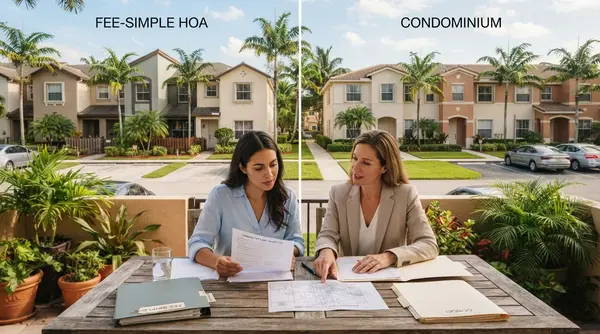
HOA and condo fees can also change affordability. In condos and townhomes, buyers should review monthly fees, budget health, reserves, rules, special assessments, insurance coverage, and building condition.
Some condo buildings may create financing challenges. Lenders may review the association’s budget, insurance, reserves, litigation, occupancy, special assessments, and building documentation. Fannie Mae states that condo project review helps lenders determine whether a project meets eligibility standards.
Florida condo rules are also evolving. A 2025 Florida Senate summary of HB 913 noted changes related to milestone inspections, Structural Integrity Reserve Studies, reserve funding, and special assessment options for certain associations.
Buyers should also think about climate and maintenance considerations. Roof age, drainage, flood risk, storm protection, exterior maintenance, and insurance requirements can affect long-term ownership costs.
Location and lifestyle logistics matter too. Commute, work schedule, family needs, daily routines, property type, parking, building rules, and maintenance responsibilities should all be part of the decision.
Why the Monthly Payment Matters More Than the Headline Price
The list price gets attention, but the monthly payment determines whether the home fits your life.
A buyer should understand the full payment before deciding whether a home is affordable. That includes:
- Principal and interest
- Property taxes
- Homeowners insurance
- Flood insurance if applicable
- Mortgage insurance if applicable
- HOA or condo fees
- Utilities
- Maintenance
- Repairs
- Reserves after closing
Two homes with the same price can have very different monthly costs. One may have higher insurance. Another may have higher taxes. A condo may have a lower purchase price but a higher monthly association fee. A single-family home may have no HOA fee but require more maintenance.
This is why “should I buy a house now” is not the most useful question by itself. A better question is “Can I comfortably afford this specific home after including all ownership costs?”
Comfort matters. A payment that technically qualifies with a lender may still feel stressful if it leaves no room for savings, repairs, travel, caregiving, child care, business expenses, or emergencies.
Why Long-Term Planning Matters
Short-term market headlines can make buying feel confusing. One month may bring news about rates. Another may bring news about inflation. Another may focus on prices, inventory, or economic concerns.
Real estate decisions usually work best when viewed through a longer lens.
A buyer planning to stay for several years may evaluate uncertainty differently from someone who may need to sell again soon. Long-term ownership gives more time to absorb normal market changes, make improvements, build stability, and adjust to economic cycles.
That does not mean buyers should ignore current conditions. It means current conditions should be balanced against personal plans.
Ask yourself how long the home is likely to fit your needs. Think about space, work, family responsibilities, commute, maintenance, property type, and monthly cost. A home that fits for seven to ten years may be evaluated differently than one that may only fit for two years.
The goal is not to predict the market perfectly. The goal is to avoid making a short-term emotional decision about a long-term purchase.
A Good Deal Still Needs to Be the Right Deal for You
A home can look like a good deal and still be the wrong deal for your situation.
A property may be priced below comparable sales. A seller may be motivated. There may be room to negotiate. The home may even have equity potential. But none of that matters if the payment is uncomfortable, the insurance is too high, the condo rules do not fit, the repairs are beyond your budget, or the timeline does not make sense.
A good deal still needs to fit your finances, reserves, risk tolerance, and long-term plan.
For example, a condo with an attractive price may still require careful review of association fees, reserves, building condition, insurance, financing eligibility, and special assessments. A single-family home with a lower price may need roof work, flood mitigation, plumbing updates, or major maintenance.
The right deal is not just about purchase price. It is about total cost, condition, use, timing, and comfort.
How a Prepared Buyer Can Evaluate an Opportunity
A prepared buyer does not need to know exactly where the market is going. They need a clear way to evaluate whether a specific purchase makes sense.
Helpful questions include:
- Can I afford the payment comfortably?
- What happens if insurance, taxes, HOA fees, or maintenance costs rise?
- Do I have emergency reserves after closing?
- How long do I realistically plan to stay?
- Is the property condition manageable?
- Are there flood, insurance, roof, structural, or maintenance concerns?
- If it is a condo or townhome, are there HOA or association issues to review?
- Is the seller motivated, and are the terms negotiable?
- Do comparable sales support the value?
- Am I buying because the home fits my needs, or because I feel pressured?
These questions do not replace professional advice. They help you have better conversations with your lender, real estate agent, attorney, tax professional, or financial advisor.
The Role of a Calm Strategy in an Uncertain Market
Miami buyer strategy matters most when the market feels uncertain.
A calm strategy starts with pre-approval, not browsing. A lender can help you understand your price range, payment comfort level, down payment options, closing costs, reserves, and loan structure.
A calm strategy also includes understanding full ownership costs before making an offer. This is especially important in South Florida because taxes, insurance, condo fees, assessments, and maintenance can affect affordability.
Buyers should compare locations and property types neutrally. The right choice depends on budget, commute, lifestyle needs, housing goals, and long-term plans. A condo, townhome, or single-family home may each make sense depending on the buyer.
For condos and townhomes, the strategy should include reviewing association documents, fees, reserves, insurance, special assessments, financing eligibility, rental rules if relevant, and approval timelines.
A calm strategy also includes knowing when to walk away. If the numbers do not work, if the property condition creates too much risk, or if the monthly payment feels stretched, passing on the home can be the right decision.
FAQ: Buying a Home When the Economy Feels Uncertain
Is it a bad idea to buy a home when the economy feels uncertain?
Not always. Buying may make sense if your income is stable, financing is strong, payment is manageable, reserves are healthy, and the home fits a long-term plan. Waiting may be wiser if the purchase would stretch your finances or create too much uncertainty.
Should I wait for interest rates to drop before buying?
Waiting for lower rates may help some buyers, but rates are difficult to predict. A better approach is to evaluate whether the current payment works without relying on a future refinance.
What if home prices go down after I buy?
Home values can rise or fall after a purchase. This is one reason long-term planning matters. If you may need to sell soon, price changes can affect you more than if you plan to stay for several years.
How do I know if I can afford to buy in Miami?
Start with your lender and review the full monthly cost, including principal, interest, taxes, homeowners insurance, flood insurance if applicable, HOA or condo fees, maintenance, utilities, closing costs, and reserves.
Are condos riskier to buy in South Florida right now?
Condos are not automatically riskier, but they require careful review. Buyers should understand association fees, reserves, insurance, special assessments, building condition, financing eligibility, rules, and approval timelines.
What should I ask my lender before buying?
Ask what payment you can comfortably afford, how much cash you need to close, how much should remain in reserves, whether insurance or HOA fees affect approval, and whether the loan program has condo or property restrictions.
How much should I keep in reserves after closing?
There is no single answer. The right reserve amount depends on your income, expenses, property type, family needs, job stability, maintenance risk, and comfort level. A lender or financial advisor can help you evaluate an appropriate cushion.
Should I buy now or wait?
Buy now only if the numbers, financing, reserves, timeline, and property fit your life. Wait if the decision feels financially stretched, rushed, or dependent on uncertain future changes.
Practical Next Step
Buying a home when the economy feels uncertain is not a simple yes or no decision. For Miami and South Florida buyers, the right answer depends on affordability, financing, income stability, reserves, insurance, property type, timeline, and long-term plans.
Some buyers should wait. Some buyers are prepared enough to move forward carefully. The difference is not confidence alone. It is preparation.
If you already own a home and are trying to decide how to time your next move, you may also want to read my guide on whether you should sell first or buy first in Miami.
If you are unsure whether buying now makes sense for you, start with a calm, numbers-based conversation. Before looking at homes, review your financing, monthly payment comfort level, reserves, timeline, and options so you can make a decision with more clarity and less pressure.
The goal is not to convince you to buy. The goal is to help you understand whether buying makes sense for your life, your numbers, and your peace of mind.
Recent Posts



GET MORE INFORMATION